Oriental Dharma within Abrahamic Environment
This is not biography as backdrop. The contemplative dimension is the source of the work — the actual root from which the books, the research, and the career draw their coherence.
This page is a personal description of a path — not a solicitation to walk it.
Kwepang — the first ceremony
Before I had any choice in the matter, I was given the first mark of the path: a kwepang (过房) ceremony on my left ear, performed in the Taoist-Buddhist-spiritualist tradition by my paternal grandmother when I was a baby. The ear piercing, dedicated to San Guan Da Di (三官大帝), is still there — even though I have not worn an earring for over forty years. The stud remained when I entered Catholic school. It remained through twenty-two years in multinational corporations. What maintains the mark is not the metal but the energetic dedication — the earring that is always there, whether worn or not.
The paternal family's spiritual orientation — rooted in mystical-clandestine Taoism, Chinese-pantheon Buddhism, and a form of devotional practice that predates the administrative categories that the Indonesian state would later impose on it — was the first current of my formation. It was not named or theorized. It was simply present in the household, in the rituals, in the way my first Taoist master entered my life through that same lineage.
Catholic school — the grammar of another house
I was educated in Catholic (Jesuit) institutions. This is not unusual for Indonesian Chinese families who value rigour and discipline in education. What it produced, in me, was not conversion — but something perhaps more valuable: a deep familiarity with the grammar of a tradition I did not inhabit from the inside.
To understand how a tradition reads its own sacred categories, how it calibrates sin and virtue, how it relates to what lies outside itself — this is not knowledge you get from studying it from a distance. You get it by spending years inside its classrooms, its prayers, its year-long rhythms. That formation is visible in every page of Buddhist KTP.
Guruji Anand Krishna
Before I had formal categories for what I was experiencing and seeking, Guruji Anand Krishna's teachings and books gave me an intellectual framework. He was the first figure who showed me that the contemplative and the analytical were not in tension — that rigour and depth could point in the same direction. That early influence is traceable in the tone of everything I have since written.
Three programs completed at Anand Ashram: Neo-Zen Reiki — 1st Degree Attunement (2008), Liberating Karmic Bind Workshop (2019), Divya Ausadh — 2nd Degree Reiki Attunement (2022).
Sadhguru — Isha Yoga
In June 2023, I received initiation into Shambavi Mahamudra at an Inner Engineering Completion program. That initiation marked a transition from spiritual interest and informal practice into committed daily discipline. Approximately two to three hours of practice daily, maintained consistently since that point.
In 2025 and 2026, I participated in advanced programs at the Isha Yoga Center in Coimbatore. Each stay deepened the practice past what can be achieved through home-based routines — the IYC environment accelerates things that ordinary life does not reach.
Ten Isha Yoga programs completed — from the foundational Inner Engineering initiation in Jakarta (2023) to the most advanced residential programs - Samyama at Isha Yoga Center in Coimbatore (2026).
Ascended Master Transmission — Silver Violet Flame & Mahatma Energy (Aug 2026)
In August 2026, I received a formal transmission of the Silver Violet Flame and the Mahatma Energy through the lineage of the Ascended Masters.
The Silver Violet Flame is a subtle frequency of purification and transmutation — a refining fire that works on karmic residues, emotional imprints, and energetic blockages at their root. It does not erase; it transforms. It dissolves what no longer serves and clarifies what remains.
The Mahatma Energy, which accompanied the transmission, is a broad-spectrum spiritual empowerment — a descending grace that aligns the individual will with higher cosmic order. It prepares the system for deeper service and a more expansive mode of being, broadening the container so that what is received can be held without distortion.
This was a deeply affecting formal transmission, and its recalibration of the interior landscape is still unfolding. It is the latest thread in a path that began with the kwepang ceremony, deepened through Isha discipline, and was tested by the Kailash crossings — each transmission thickening the fabric of the journey, each one asking for a different kind of attention.
First Kailash Yatra 2024 — North Face Darshan
In September 2024 I went to Mount Kailash for the first time. This was not a tourist trip. Kailash — Kailasam, the abode of Shiva in the Shaivite map of the cosmos, Tise in the Bon and Tibetan Buddhist cartography — is one of the few places on Earth where multiple sacred traditions converge on the same mountain without any of them claiming ownership. To be present at a site that has drawn pilgrims for thousands of years, across traditions, is to understand something about sacred geography that cannot be theorized from outside.
That first visit was a threshold. What came before it and what came after it are not the same.
Second Kailash Yatra 2026 — Full Kora at Full Moon
This Jun-Jul 2026 I returned to Kailash for the full circumambulation — the 3-days Kora, hiking 52 km around the mountain at altitude, crossing Dolma La at 5,630 metres. Where the first visit was a threshold, the Kora is the crossing. This time I also got the chance to touch the freshwater of Manasarovar Lake at 4,590 metres.
Pancha Bhutha Sthalams — Pilgrimage to the Five Elements (End Sep 2026)
My initial plan for late 2026 was to attend the Mahakshetra Nirmana consecration at the Isha Yoga Center in Bengaluru. However, with its postponement, I chose to pivot towards a pilgrimage to the Pancha Bhutha Sthalams — the five sacred temples of South India, each enshrining Shiva as the embodiment of one of the five elements of creation.
Where the Kailash Kora was a vertical, high‑altitude circumambulation, this journey is a horizontal traversal — moving from the deep south northward through the elemental architecture of the cosmos. The postponement of the consecration opened a different door: instead of witnessing a single moment of consecration, this pilgrimage offers a sequential immersion across five distinct energetic nodes, each one a direct encounter with a fundamental constituent of existence.
The itinerary, moving south to north, is:
- Water (Apas) — Jambukeswarar Temple, Thiruvanaikaval. The element of fluidity, emotion, and latent potential; the source from which all life emerges.
- Ether (Akasha) — Thillai Nataraja Temple, Chidambaram. The element of space, consciousness, and the cosmic dance; the field in which all else unfolds.
- Fire (Agni) — Arunachaleswarar Temple, Tiruvannamalai. The element of transformation, energy, and spiritual ascension; the flame that refines and liberates.
- Earth (Prithvi) — Ekambareswarar Temple, Kanchipuram. The element of stability, manifestation, and grounded presence; the solid ground of being.
- Air (Vayu) — Srikalahasteeswarar Temple, Srikalahasti. The element of movement, breath, and the subtle life force; the final attunement before returning.
Moving through these five temples in this sequence is not merely travel — it is a graduated practice of elemental attunement, a slow recalibration of the self through the materials of which the self is also composed. The postponement of the consecration was not a cancellation. It was a redirection.
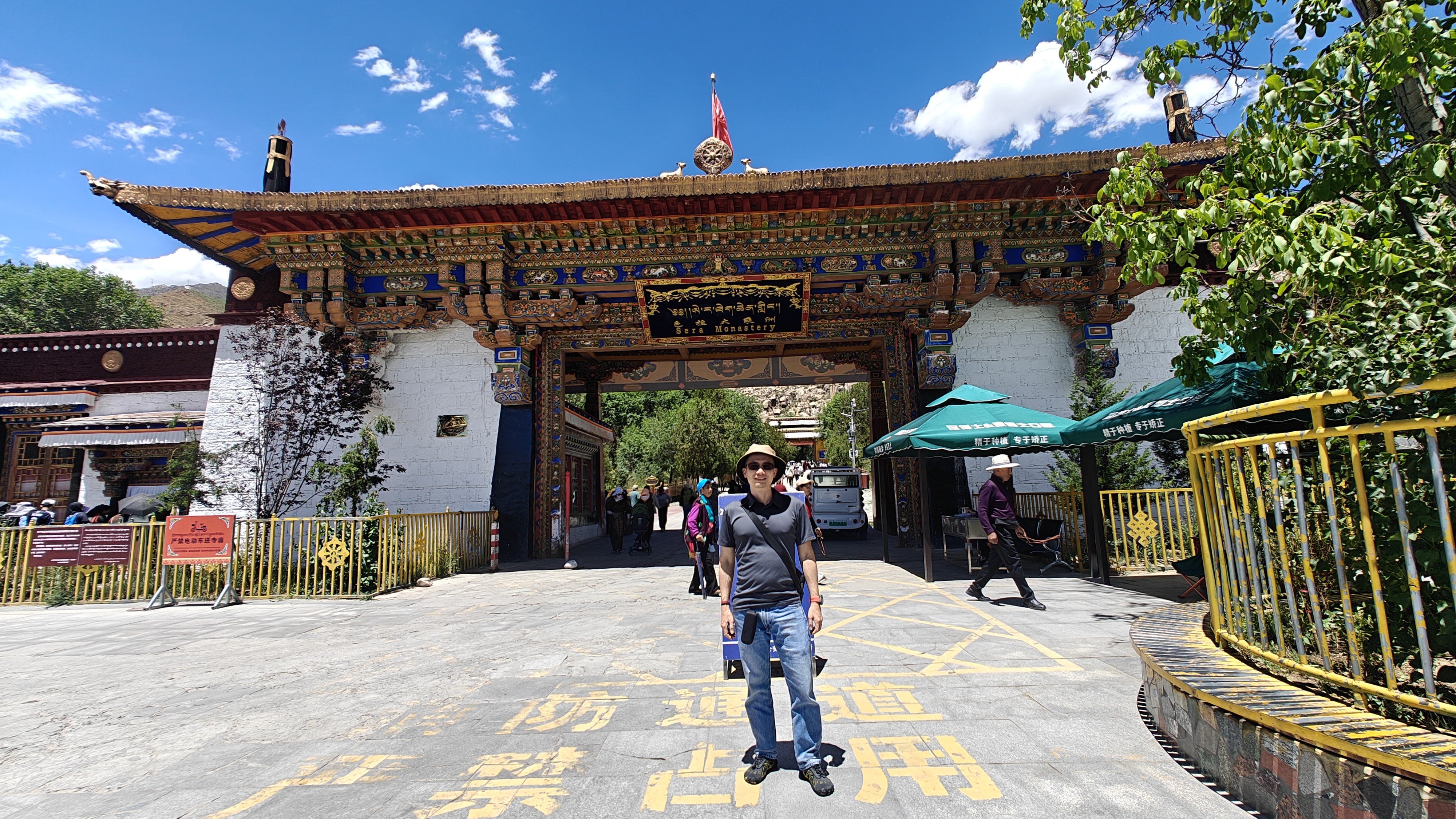
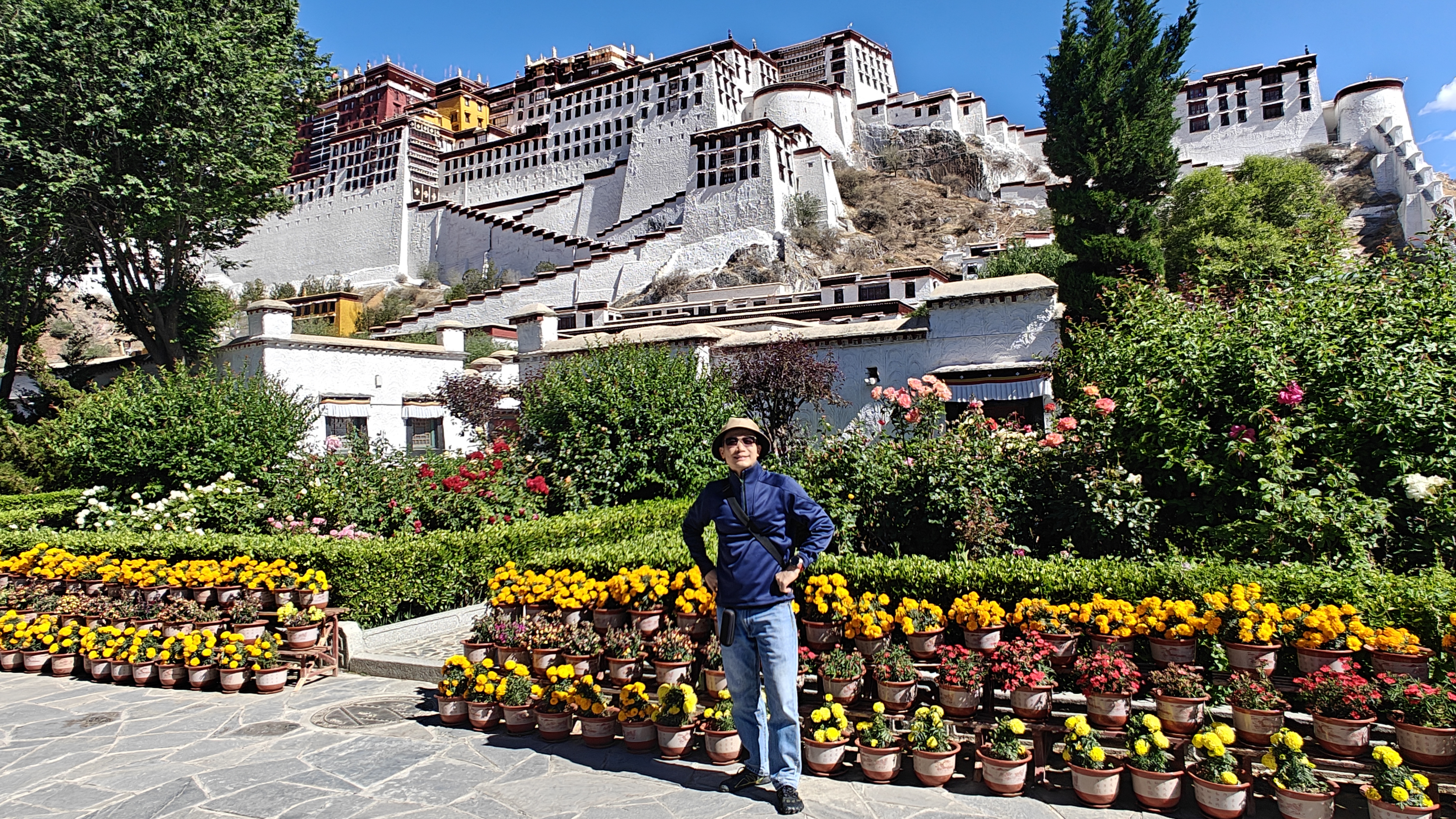
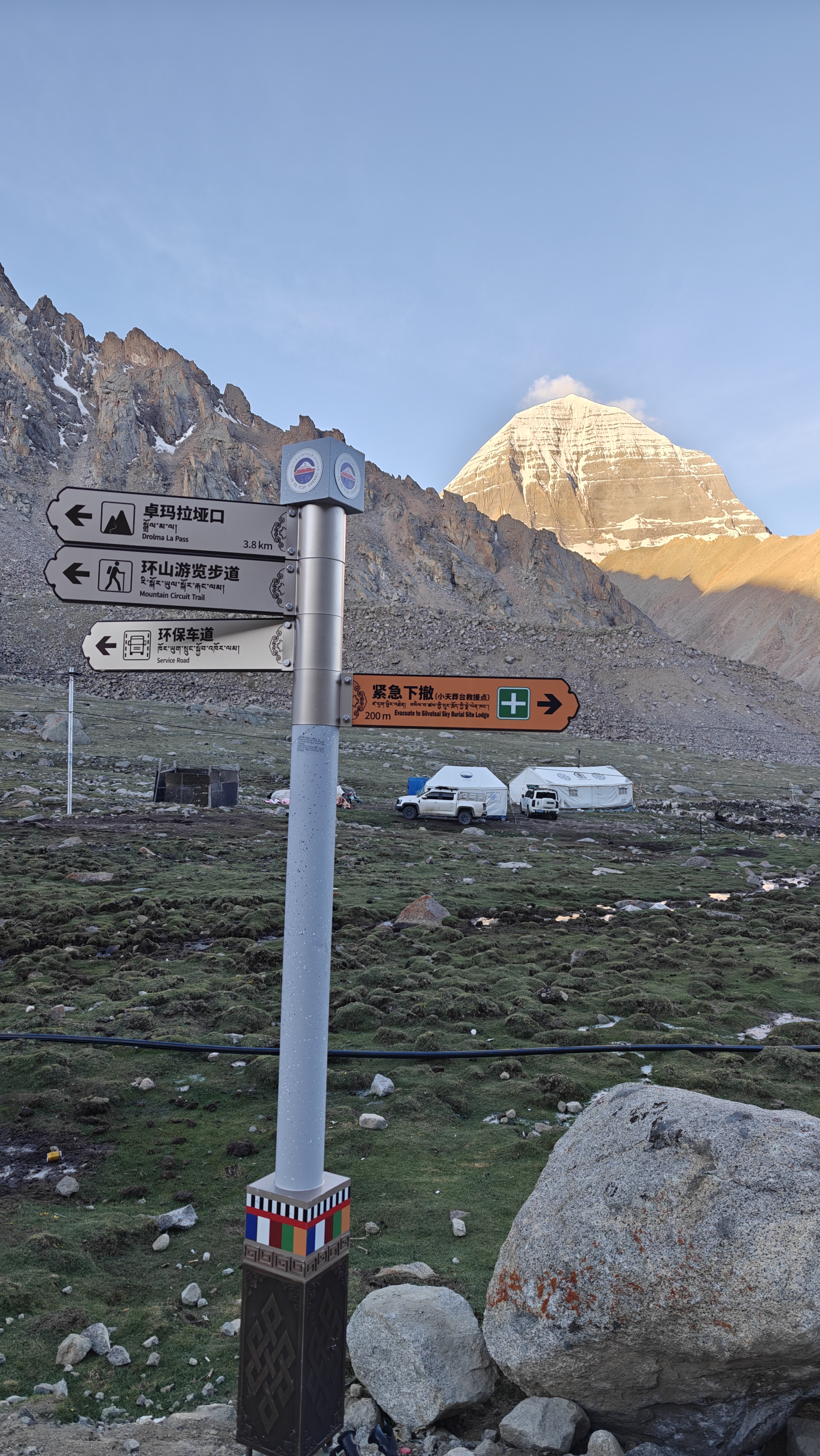
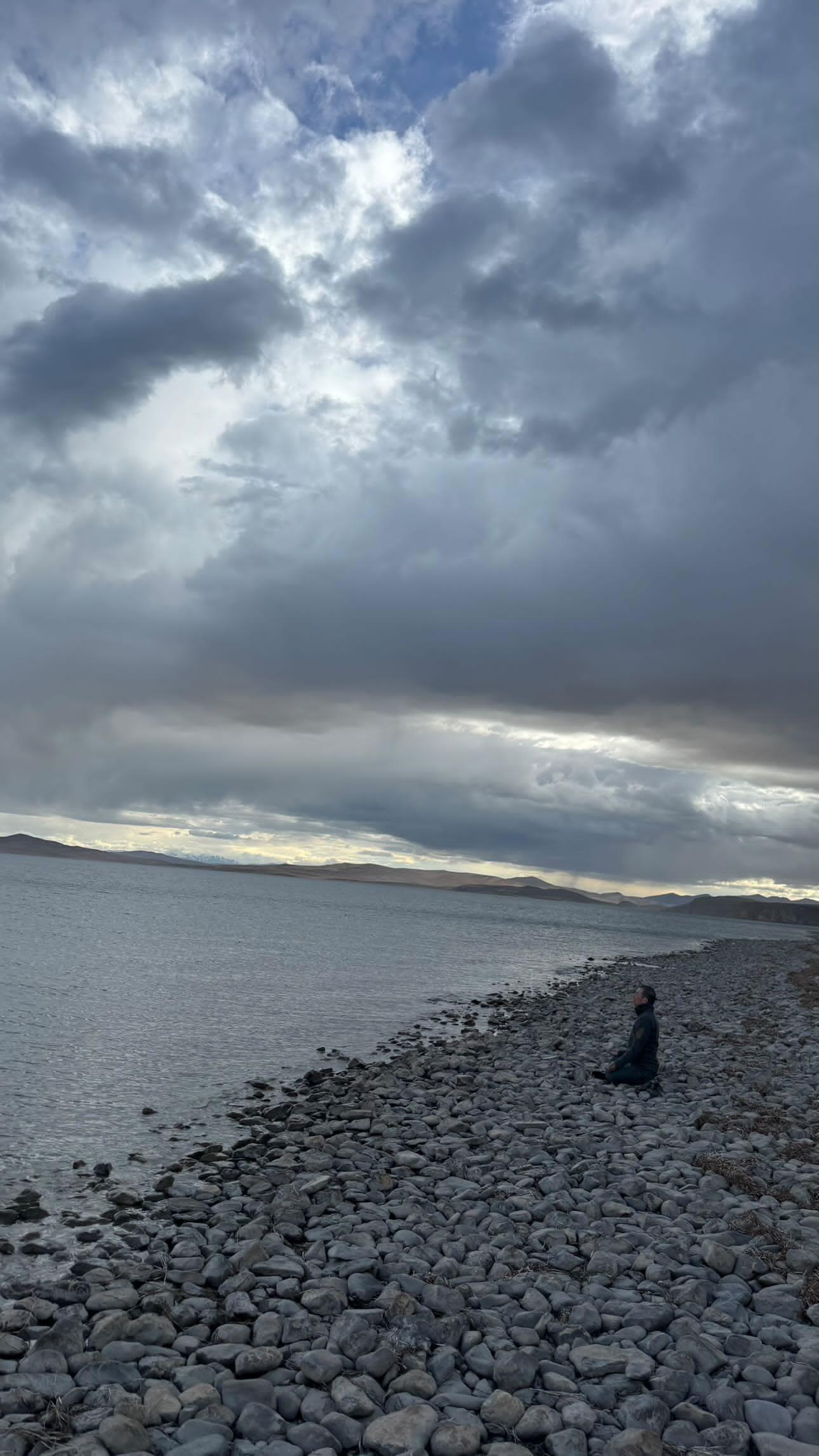
The ear piercing from my kwepang ceremony, performed in the Taoist-Buddhist tradition of my paternal lineage, and the disciplines of the Isha path are separated by more than forty years and two different contemplative lineages. They are also, in some sense I cannot fully articulate, the same kind of mark — a commitment to something that does not need to be named to be real.
Catholic school formation · Economics & Business Management degree · Twenty-two years in international corporate institutions · Professional credentials · Sharp analytical training. The current that knows institutions from the inside and speaks their grammar fluently.
Taoist-Buddhist household practice · Taoist lineage transmission · Isha Yoga discipline · Sacred pilgrimages · Deep immersion in Dharmic intellectual tradition. The current that could grasp stillness that inspires beyond empirical senses as a lived practice, not a theory.
Neither current is more fundamental than the other. The vantage point between them — neither fully inside nor outside any single system — is the actual source of the work described on this site.
If you are a fellow seeker — whether you practice within a tradition, between traditions, a highly disciplined practitioner, or a curious enthusiast, or simply feel a quiet resonance with something you've read on this page — I'd be delighted if you would reach out.